The Guernsey English Curriculum at Key Stage 2
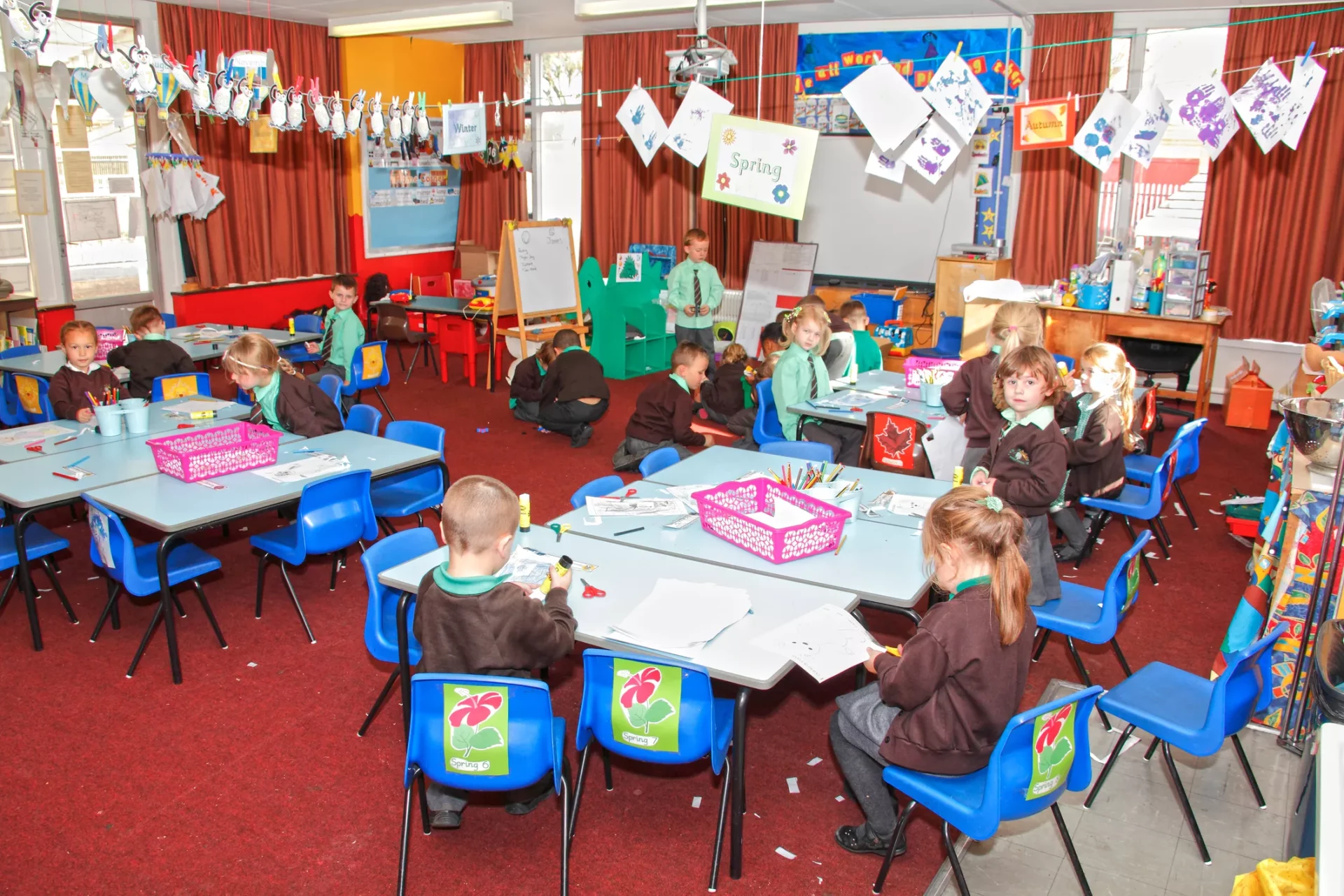
English is perhaps the most important subject taught at schools in Guernsey: it contains learning in fundamental skills which underpin many other areas of the Guernsey curriculum. In Key Stage 2, students are expected to read fluently and with comprehension across a range of subjects, including English, History, Science, and Geography. Solid foundations in reading and writing open up a whole world of stories and factual materials alike, and help children to develop their imagination, creativity, and critical thinking skills.
The Guernsey English Curriculum was written by highly skilled educators and English tutors from across the Early Years, Primary and Secondary sectors, with support from the Somerset Literacy Network and the Guernsey Literacy Support Service. In the majority of Guernsey Primary schools, children will have a minimum of one hour a day specific English lesson time, along with additional reading, precision grammar and spelling tutoring, and opportunities to develop speaking and listening skills.
Prior Learning
In Reception and Key Stage One, children will have practiced counting both forwards and backwards, been taught the basics of place value, and used a phonics scheme (most Guernsey schools use Little Wandle Phonics) to decode, segment and blend words, read with prosody, and comprehend on a literal and inferential level.
English in the Lower Juniors
Once a child joins their school's Junior department in Year 3, the level of independence increases greatly. Where children require extra support to develop their reading skills, many families have found that working with a specialist English tutor in Guernsey can make a significant impact across the entire curriculum.
Reading Year 3 & 4: Reading and navigating new texts fluently and accurately, reading aloud with intonation and expression, retrieving specific information, summarising and sequencing events, inferring meaning and feelings – a skill our English tutors in Guernsey often work on with students – and recognising how writers select words for effect.
Writing Year 3 & 4: Writing longer, more complex pieces organised into paragraphs, using an increasing range of punctuation, selecting language appropriate for audience and purpose, applying spelling rules and patterns (an area where children with additional literacy needs including dyslexia often require more support), using varied sentence structures, and proofreading and editing.
Speaking & Listening Year 3 & 4: Organising and shaping what they say for relevance and interest, structuring arguments and presenting opinions, listening and responding to different views respectfully, and developing awareness of varieties of language use.
English in the Upper Juniors
As your child joins Year 5, you will again see a significant step up in the level of English required. Teachers and English tutors in Guernsey often concentrate on understanding and composing complex sentences, using a variety of clauses across a wide range of genres.
Reading Year 5 & 6: Reading independently and accurately, retrieving and locating information, summarising events and identifying themes, interpreting and inferring meaning, making predictions, and recognising authors' perspectives and the significance of social, historical and cultural influences.
Writing Year 5 & 6: Using the full range of punctuation appropriately, selecting language for effect, applying spelling rules to unfamiliar words, using varied sentence lengths and structures with ideas linked between paragraphs – an area our English tutors in Guernsey often help students develop – and proofreading and editing independently.
Speaking & Listening Year 5 & 6: Articulating ideas clearly in planned and impromptu contexts, presenting reasoned arguments, listening and building on others' ideas sensitively, and assured, fluent use of standard English when appropriate.
As you can see, there is a lot of dedicated teaching and tutoring of complex knowledge which goes into preparing a child to be ready to start their Secondary English education in Guernsey. By developing strong English skills, students are better able to access learning, perform well in assessments and exams, and engage with the wider world.
Tell us about your child
Tell us a little about your child and what you're looking for from tutoring. We'll then consider which of our tutors we think will suit them best, starting with a free taster session.